

209 Boxes.
What moving our entire life taught me about the stuff you can't put in a box...

209 boxes.
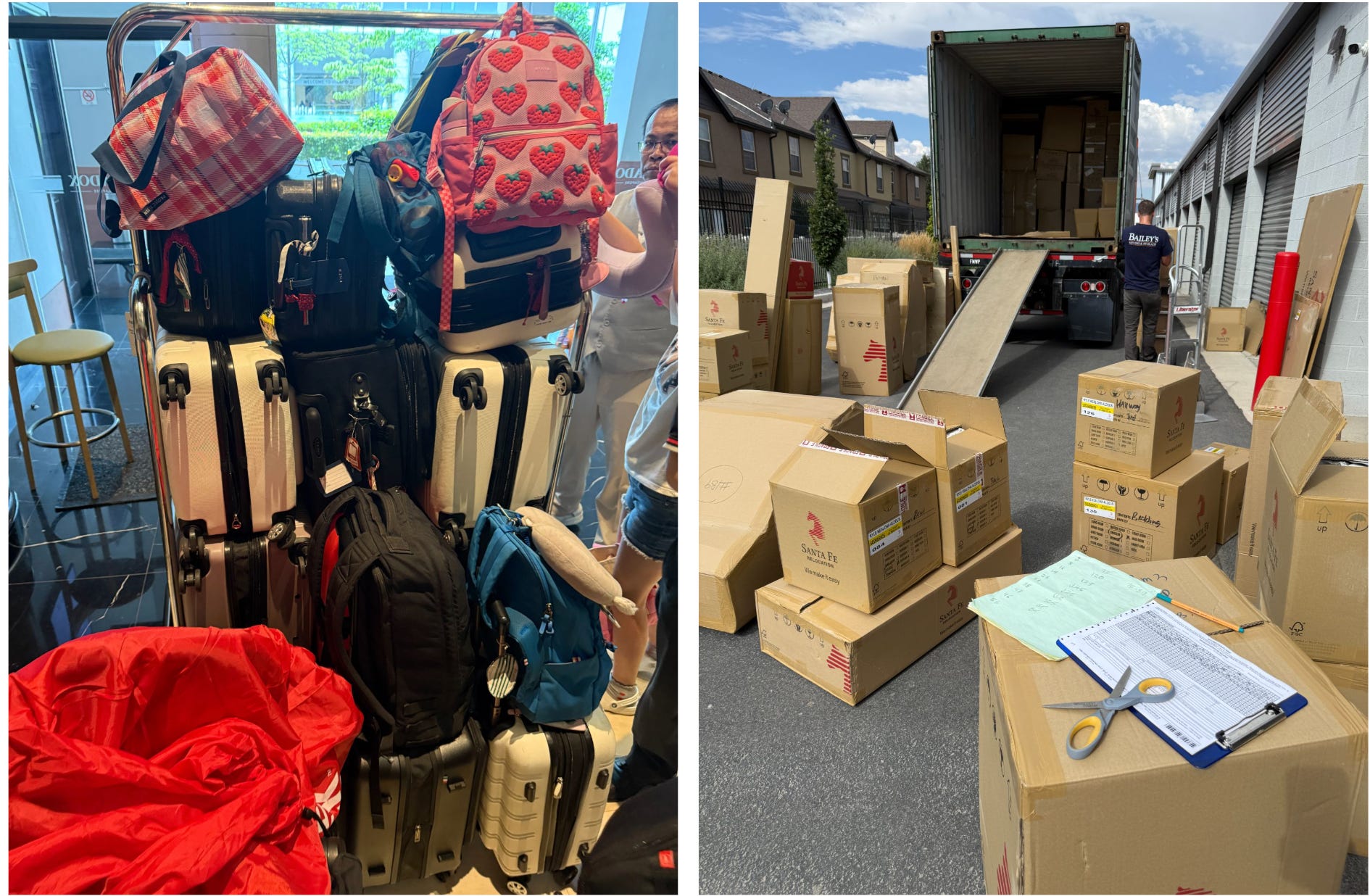
11 suitcases (of various sizes).
7 backpacks.
3 tote bags.
Our entire life fit inside all of these.
For the first time in over a decade, we were forced to do a deep inventory of our lives.
And when you’re forced to touch everything you own, things get very clear, very fast. Like the fact that we owned 18 green crayons. Eighteen. They’d lived full lives in various nooks around the house, each at a different stage of decay. They’d been part of us for years—we just didn’t know it until the very end.
We were given a 20-foot shipping container for the move. And we weren’t even close to fitting everything inside.
The moving company took one look at all of our stuff and said: get rid of a third of everything you own, and then maybe we’ll have a chance.
At first you think, shoot, how am I supposed to get rid of a third of my life?
At least, that’s what you think until you actually start taking inventory. Then it hits you fast: you never needed most of it. In fact, you didn’t even know you had half of it in the first place.
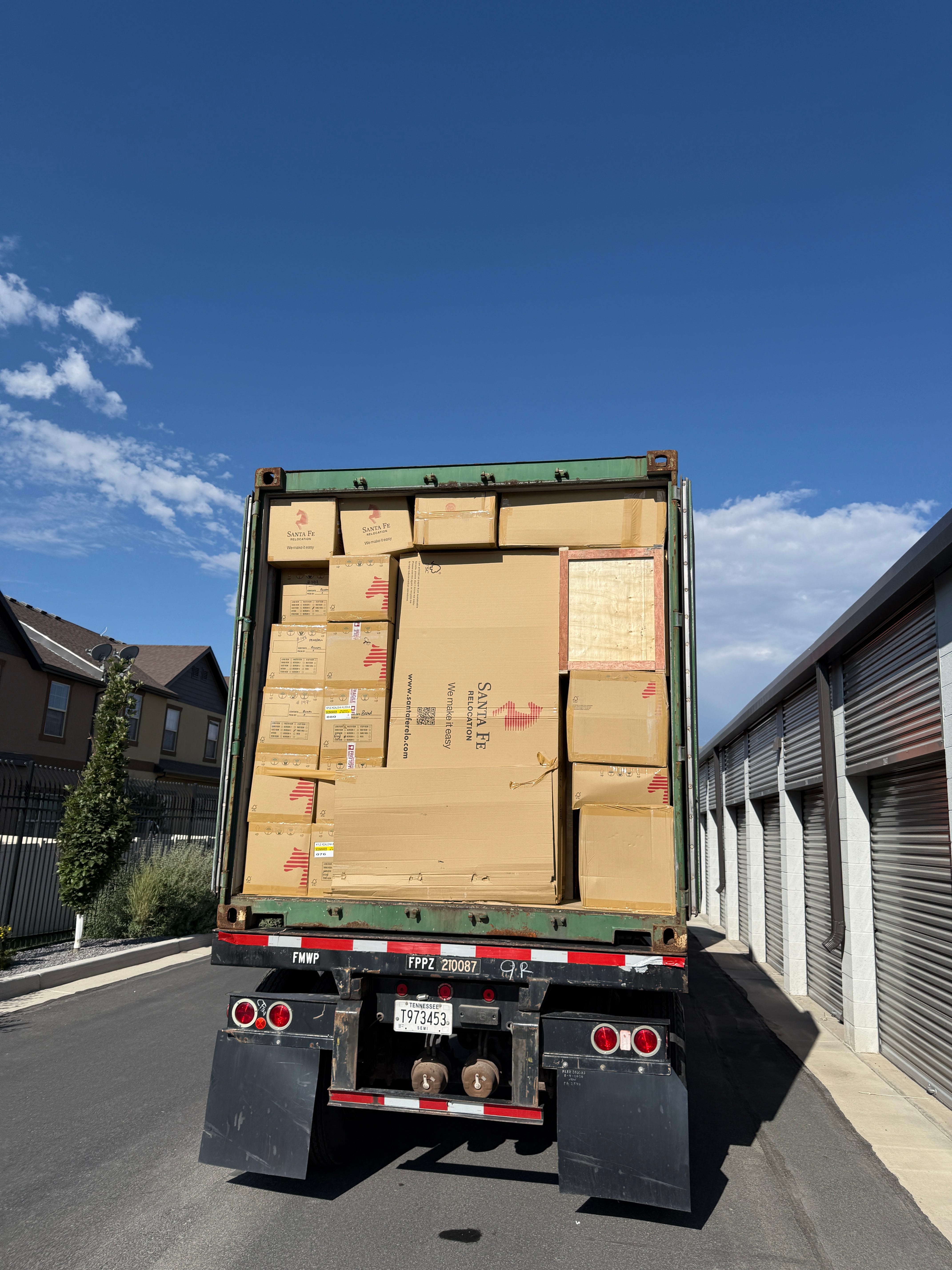
Earlier this week, our shipment arrived in Utah and we moved it into storage. We counted the boxes one by one. 209 of them, stacked in a single storage unit.
It reminded me of my years in retail (GAP, Victoria’s Secret, Blickenstaff’s). Every year we conducted inventory. You had to. It was the only way to account for the extra items, the stolen ones, the missing ones. And there was something clarifying about it: for one moment, you knew exactly what you had.
I was thinking about that as we stacked those 209 boxes.
Because it’s not just the physical inventory that matters.
Have you ever thought about what’s in your container? Not the boxes and the crayons — the mental, the social, the emotional, the spiritual. There are things you’ve accumulated over the years (your own version of 18 green crayons) that you have no idea are even there. Things still quietly occupying your space. And there’s a cost to storing them, whether you realize it or not.
Ok, so it sounds good to see it all, to finally understand what’s taking up room in your life. But how do you actually take inventory of the things you can’t hold in your hands?
You ask better questions. Here’s a few to start:
What’s taking up prime real estate — my best hours, my first thoughts — that doesn’t deserve the spot?
What resentment am I paying for year after year? What would it cost to leave it behind?
Where am I spending emotional energy out of obligation rather than love?
What belief have I outgrown but still make my decisions with?
Whose voice is in my head when I judge myself — and did I ever agree to let them in?
What am I saying yes to that is secretly a no to something I claim matters more?
Some of these might be hard to sit with, especially if you’ve never made space for questions like these before. But that’s exactly the point. If they’re hard, it probably means you’ve been hoarding a lifetime of beliefs, perspectives, and decision-making frameworks without ever stopping to ask if they still serve you.
And here’s the trouble. Unlike the shipping container we just unpacked, you can’t physically see the weight of what you’re carrying. When the movers opened our container, the boxes were packed like Tetris pieces, straight to the edge — visible, countable, real. Your mind doesn’t work that way. It might look more like a hoarder’s house: shelves overflowing, drawers stuck shut, whole boxes shoved so deep into the garage you’ve forgotten they’re there.
But forgotten doesn’t mean gone. Those things show up at the worst times, in the worst ways — like broken green crayons turning up all over the house, long after you thought you’d cleaned them out.
So this week, step back and imagine you’re moving. Take a real look at your life and ask: what’s in my container? What’s taking up space right now, and, more importantly, what actually deserves a place moving forward?
Keep Asking,
Kyle